
Bloody Sunday In American Memory

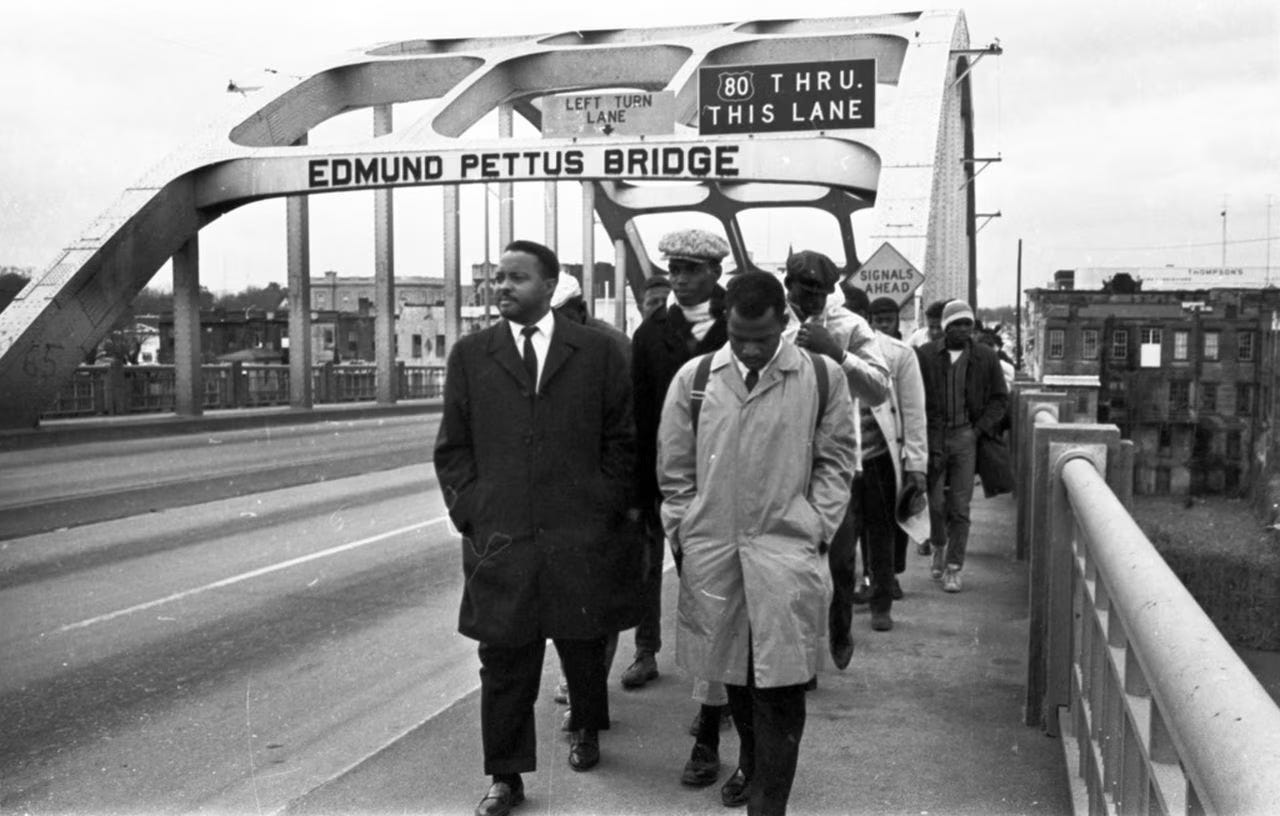
58 years ago the first week of March 1965, in Selma, AL, USA, 600 Americans started a 50-mile march towards AL state capitol of Montgomery. They were protesting laws that prevented Black Americans from exercising voting rights. Predictably, as the demonstrators walked to the Edmund Pettus Bridge, Alabama State troopers used menacing, violence, and tear gas to disperse them.
Frightened but undeterred, the unarmed demonstrators kneeled before the oncoming onslaught of troopers. Then, led by County Sheriff Jim Clark, the posse wearing gas masks, used tear gas, clubs, whips and ropes to turn back the demonstrators.
The demonstrators fled in terror across the surrounding neighborhoods, still pursued by rampaging state troopers. Images of beaten and bloodied men, women and children shocked the nation and the world. It was highly embarrassing to the United States of America.
Civil rights leaders Hosea Williams and John Lewis led the march on that Sunday afternoon. Lewis, later, a United States, congressman from Georgia, was badly injured in Selma, suffered a fractured skull after being beaten by the troopers. “I thought I was going to die on that bridge that day,“ he later said.
Two John Lewis Interviews
Defiant until his dying day, Sheriff Jim Clark used brute force with impunity to defend segregation in Alabama. On Bloody Sunday, when someone called for an ambulance to help the injured, Clark infamously declared, "Let the buzzards eat them."
Sheriff Jim Clark Interview as an old man
Bloody Sunday was a landmark event in the history of the American Civil Rights Movement. The brutality of White Supremacist law enforcement and the casual racism and egging on by White onlookers in broadcasted photographs and video from this event shocked a complacent White America into legislative action.
National Archives’ Newsreel of the Marches
The march moved the nation to pass the landmark Voting Rights Act, which mandated federal oversight over elections in states with histories of discrimination. The 2015 film, "Selma," portrays the march in vivid detail. ANational Voting Rights Museum and Institute was opened many years later at the foot of the Edmund Pettus Bridge.
John Lewis Oral History
On the 50th anniversary of Bloody Sunday, Barack Obama, America’s first black president, delivered remarks from the Edmund Pettus Bridge to mark the 50th anniversary of the marches from Selma to Montgomery.
Remarks by President Obama on the 50th Anniversary of Bloody Sunday