
MumBet
Woman of Steel

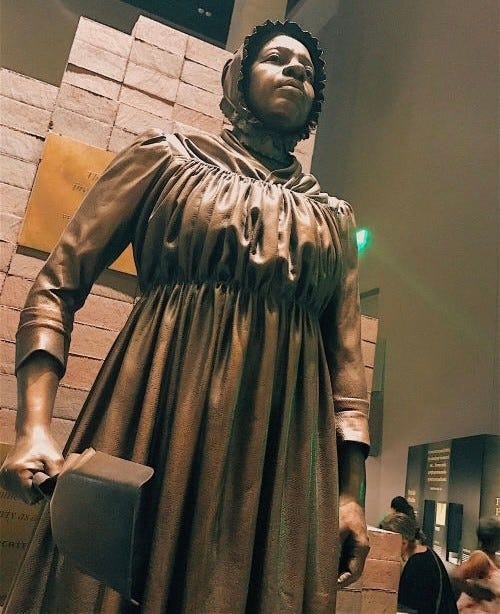
Image: Statue of Elizabeth Freeman at the Smithsonian National Museum of African American History & Culture.
Elizabeth Freeman, known as MumBet, symbolized the relentless spirit of those who challenged the brutal system of slavery. Her personal victory intertwined with the broader quest for freedom & equality in early America. Notably, almost a decade before the U.S. Constitution's ratification, she became the first Black American woman in Massachusetts to successfully sue for her freedom.
It took MumBet at least 30 years to be able to fight for her freedom.
Born around 1744 in Claverack, New York, MumBet was enslaved from birth. She was owned by Pieter Hogeboom, and after his death, she was transferred to his son-in-law, John Ashley and his wife, a wealthy and prominent western Massachusetts family of Sheffield, Massachusetts.
Mrs. Ashley was not kind to her slaves. In a brutal moment, Mrs. Ashley went to strike another slave with a hot shovel, and MumBet blocked the blow, leaving her a scar.
MumBet:
"Madam never again laid her hand on Lizzy. I had a bad arm all winter, but Madam had the worst of it. I never covered the wound, and when people said to me, before Madam, ‘Why, Betty! what ails your arm?' I only answered, ask missis!'
“Which was the slave and which was the real mistress?"
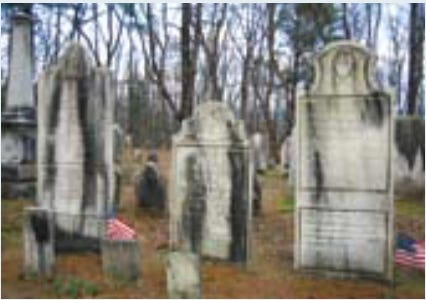
Image: Ashley graves.
Colonel Ashley served as a judge of the Berkshire Court of Common Pleas. In January 1773, Ashley moderated the local committee that wrote the Sheffield Declaration. Also known as the Sheffield Resolve, the Declaration was a petition against British tyranny, as well as a manifesto for individual rights of American colonists.
In particular, the Sheffield Declaration declared that “mankind in a state of nature are equal, free, and independent of each other, and have a right to the undisturbed enjoyment of their lives, their liberty and property.”
Notably, this language was to be found again in the Declaration of Independence of 1776 and in the Massachusetts Constitution of 1780.
At some point, MumBet overheard Colonel Ashley and his dinner guests “talking over the Bill of Rights… that all people were born free and equal.” Mum Bett recognized that the principles of liberty and equality the men discussed could also apply to her. From that moment, she resolved to gain her freedom.
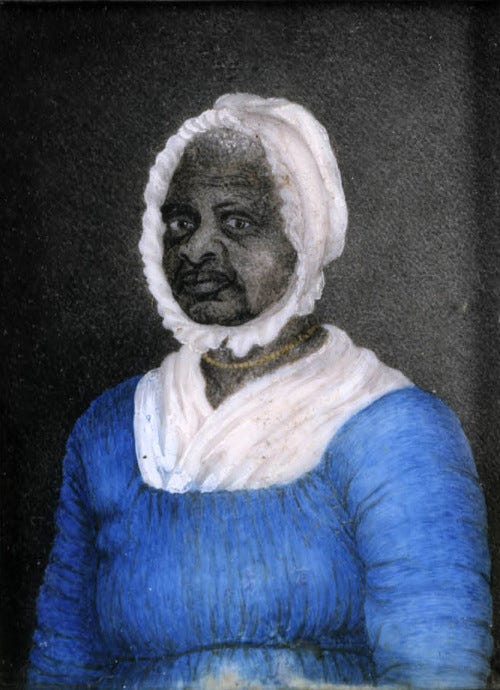
Image: MumBet, aka Elizabeth Freeman, aged 70. Painted by Susan Ridley Sedgewick, Theodore Sedgewick’s’ niece.
MumBet sought out the aid of Theodore Sedgewick, a lawyer in the neighboring town of Stockbridge, who supported the anti-slavery cause. Sedgewick later described Mum Bett bringing her case to him on the grounds of the newly ratified Massachusetts Constitution.
Mum Bett was joined in her freedom suit by another enslaved man, Brom, who was also the property of Colonel Ashley. Sedgewick brought the case to the Berkshire Court of Common Pleas in May 1781.
Prior to 1780, there had been about 30 freedom suits brought forward in which slaves sought freedom from their masters on legal technicalities, such as a mother's slave status (if unclear). In the case of MumBet and Brom, however, Sedgewick took the case to court on constitutional grounds, arguing that due to the Massachusetts Constitution’s language on equality, slavery was outlawed in the state and MumBet and Brom were not Ashley's legitimate property.
The case was widely considered to be a “test case,” as lawyers on both sides of the issue were keen to see how a court would interpret the new Massachusetts Constitution in light of Sedgewick’s request for the freedom of Mum Bett and Brom from slavery.
Sedgewick obtained a writ of replevin from the court, an action for the recovery of property.
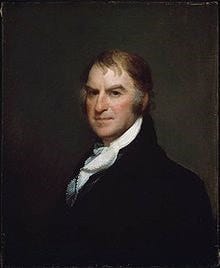
Image: Theodore Sedgewick portrait by Gilbert Stuart, c. 1808
The writ ordered Colonel Ashley to release Mum Bett and Brom because they were not his legitimate property. The Colonel refused to do so.
By August 1781, Colonel Ashley still refused to release Mum Bett and Brom from his ownership. Their case was advanced to the County Court of Common Pleas of Great Barrington, where Sedgewick argued before the court that the Massachusetts Constitution outlawed slavery.
On August 22, 1781, the jury agreed, declaring MumBet and Brom to be free people. The court granted them 30 shillings each.
After gaining her freedom, MumBet chose the name Elizabeth Freeman (the surname "Freeman" symbolized her new status).
After gaining her freedom, MumBet adopted the name Elizabeth Freeman. Rather than returning to Colonel Ashley's employ as he requested, she worked for pay at Theodore Sedgewick's residence.
Elizabeth also became renowned in her community for her expertise as a healer, midwife, and nurse. Eventually, she purchased her own home where she lived with her children.
Elizabeth's groundbreaking case marked the first victory for an African American woman in Massachusetts, seeking freedom. This case paved the way for three additional freedom suits, together known as the Quock Walker case.
While the impact of these cases on the abolition is debated among historians, they undeniably marked a significant advancement toward the cause. This progression culminated in Supreme Court Chief Justice William Cushing's declaration that slavery was in conflict with the ideals of freedom & legal equality set forth in the Massachusetts Constitution.
Elizabeth Freeman's legacy is multifaceted. Her courageous decision to challenge her enslavement in court not only secured her personal freedom but also contributed to the abolition of slavery in Massachusetts. Her life serves as a powerful reminder of the countless enslaved individuals who resisted oppression in various ways.
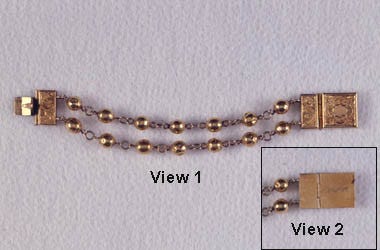
Image: MumBet’s bracelet (which she wore as a necklace), from the Massachusetts Historical Society.
Additionally, her story illuminates the complex intersections of race, gender, and law in early America. As a black woman in a predominantly white, male-dominated society, Elizabeth navigated a myriad of challenges to assert her rights and dignity.
Mum Bett died on December 28, 1829 and was buried in the Sedgewick family plot.
Her gravesite in Stockbridge, Massachusetts, bears an epitaph that fittingly reads,
“ELIZABETH FREEMAN, also known by the name of MUMBET died Dec. 28th 1829. Her supposed age was 85 Years. She was born a slave and remained a slave for nearly thirty years; She could neither read nor write, yet in her own sphere she had no superior or equal. She neither wasted time nor property. She never violated a trust, nor failed to perform a duty. In every situation of domestic trial, she was the most efficient helper and the tenderest friend. Good mother, farewell.”
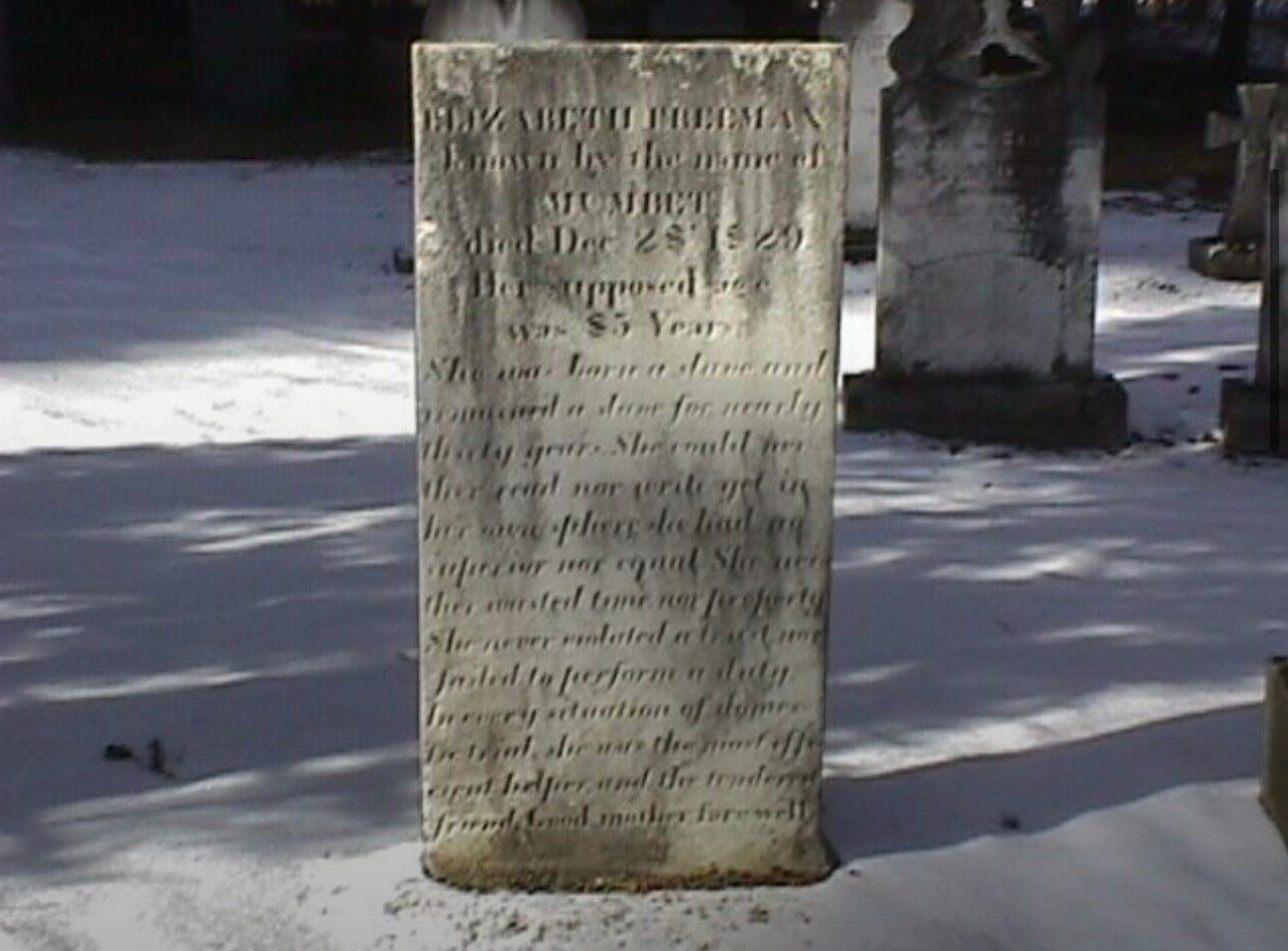
Image: Grave of Elizabeth Freeman
Elizabeth Freeman (Mum Bett) faced almost insurmountable systemic oppression but she survived and thrived with dignity. Her story is a testament to individual agency, the transformative potential of the law, and an enduring spirit of resistance.

Image: Cover art for in development film starring Octavia Spencer.
Once she said:
“Any time, any time while I was a slave, if one minute's freedom had been offered to me, and I had been told I must die at the end of that minute, I would have taken it—just to stand one minute on God's airth [sic] a free woman—I would.”
— Elizabeth Freeman
Resources
https://www.masshist.org/database/viewer.php?item_id=547&pid=15
https://www.womenshistory.org/education-resources/biographies/elizabeth-freeman
https://elizabethfreeman.mumbet.com
https://www.pbs.org/wgbh/aia/part2/2p39.html
https://www.masshist.org/database/548
Books
Piper, Emilie, and David Levinson. One Minute a Free Woman: Elizabeth Freeman and the Struggle for Freedom. Salisbury, CT: Upper Housatonic Valley National Heritage Area, 2010.
Rose, Ben Z. Mother of Freedom: Mum Bett and the Roots of Abolition. Waverley, Massachusetts: Treeline Press, 2009.
Wilds, Mary. Mumbet: The Life and Times of Elizabeth Freeman: The True Story of a Slave Who Won Her Freedom. Greensboro, North Carolina: Avisson Press Inc, 1999.