
The Archetype
He clung to the worn rituals of his life, an aging worker holding the line as the country shifted, splintered, and slipped into a future he could no longer recognize.

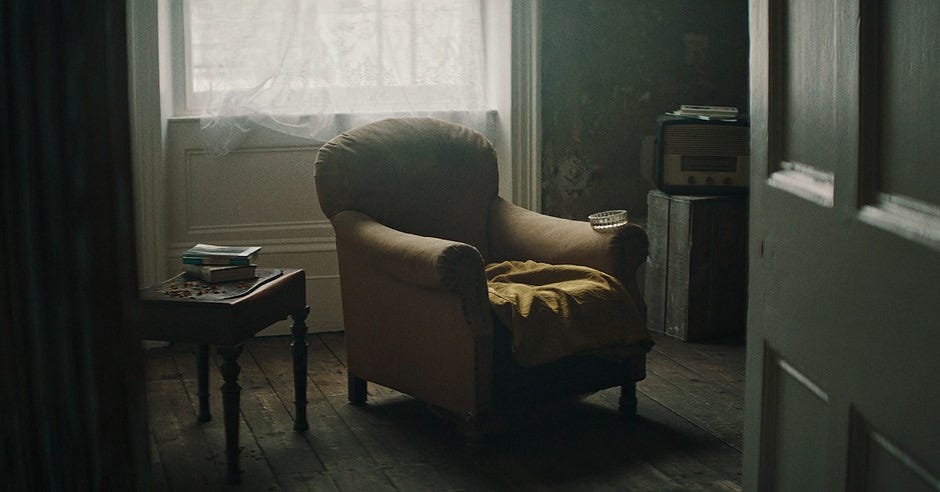
Image: The Empty Chair” by Sye Allen. ITV. Source: https://tv.booooooom.com/2020/11/12/the-empty-chair-sye-allen/
The house was his fortress. The recliner, faded and frayed at the arms, sat where it always had, tilted toward the television like a command post. The curtains were drawn tight against the street, the air faintly sweet with smoke, the lamp casting a tired cone of light across the brown carpet. The walls, yellowed by years of habit, held a silence shaped by working-class routine and the slow erosion of time. Beyond them, the century moved—cities burning, soldiers returning, rights demanded and denied—but in here, nothing moved except the tremor in his leg and the stubborn ticking of the clock.
He had built his life the way men of his generation were told to: brick by brick, shift by shift, one mortgage payment at a time. The factory had been his proof of purpose; the union card, his credential. He came home to his castle every night—half a row house, half a bunke, believing that if he kept the rituals—wake up, punch in, punch out, come home, eat meatloaf, watch the news—the world would keep its promises in return. For years that faith had held. It had been enough.
And now, at fifty, he watched it all come apart one seam at a time. By 1971, the evening news announced it like daily scripture: Vietnam, inflation, protests, Watergate. He watched it all come apart one headline at a time. Each grunt was part lament, part warning, as though the sound itself might hold back the tide. World’s goin’ to hell in a handbasket, he’d mutter, invoking the phrase the way a cornered man reaches for a shield.
He was not a man of ideas; he was a man of habits—earned, inherited, ossified. And the country that once told him he was the backbone of America—men like him, men who punched clocks and paid mortgages and expected the world to move in a straight line—had changed its terms without asking him. Civil rights, feminism, college kids shouting in the streets—none of it felt like progress to him. It felt like intrusion, theft, a rewriting of rules he thought were fixed.
So he retreated to the only ground he trusted. The chair. The room. The house that had become a perimeter. In a world breaking open, he held this small territory with the only weapon he had left: the routine that once made sense of his life and now, barely, held the fragments together.
From the kitchen came his wife’s humming—thin, persistent, ordinary. Her voice filled the silence like a thread holding the room together. She sang while she cooked, while she worried, while she tried not to notice the way her husband stared at the television as though it were a map he could no longer read.
On the coffee table lay the Daily News, folded open to a photograph of a Black family standing on a porch in Queens. The headline spoke of “neighborhood change.” His eyes lingered too long. He turned the page roughly, the paper tearing where his thumb pressed.
He wasn’t a man of ideology, not really. He was a man of rhythm—up before dawn, coffee, bus, factory, lunch pail, whistle, home, dinner, TV. Those rhythms had once matched the pulse of the nation itself: the America of 1945, rebuilt on certainty and sameness. But the rhythm had changed, and he had not. His was the generation that believed in permanence, only to discover that permanence was a story the country had told itself after the war.
Outside, the neighborhood no longer sounded the same. Laughter from teenagers—college kids with long hair and no respect for work—spilled through the open window. It hit him like insult. He reached for his cigar, lit it, exhaled into the dim air. “Used to be,” he muttered, “a man could sit in his own house in peace.”
The chair creaked under him. He thought of the factory—how there were fewer men on the line now, fewer guarantees. The new hires looked different, spoke differently, sometimes came in with college degrees. The union meetings were quieter, too. He could feel the foundation shifting, the old order dissolving one memo, one hire, one policy at a time. What they called progress always seemed to mean less for men like him.
When his daughter and her husband came by on Sundays, the air thickened before they even spoke. His son in law brought talk of justice and equality, words the man had come to hate for how small they made him feel. “Don’t start!,”he’d say before the boy even opened his mouth. The phrase was armor. The argument was ritual.
He would light another cigar while his wife set the roast on the table. The television would hum behind him, that canned laughter from All in the Family’s mirror world spilling into his own. He would sit and watch himself reflected there—caricature and confession at once—without quite realizing it. The laugh track was relentless, mechanical. He never joined in.
What Carroll O’Connor once called “the poison of his beliefs” had settled deep in him now. It wasn’t only prejudice; it was structure—the scaffolding of a life built on a vanishing order. In a country that had promised stability and delivered flux, Archie found solace in certainty. His convictions were ballast, keeping him steady while the ground shifted beneath his feet.
He didn’t know that the world had already moved on—that his own story had become history. To the camera, to the audience, he was the man in the chair: half relic, half warning. But to himself, he was still the good worker, the veteran, the provider who had done what he was told. And that, somehow, was no longer enough.
The laughter from the television rose again, bright and cruel in its predictability. He stared at the blue flicker until it blurred. For a moment, his lips twitched, as though memory might trick him into smiling. Then the sound faded, and he sat still, the smoke curling upward in the lamplight.
The century outside his window was reinventing itself—civil rights, feminism, deindustrialization, a nation rearranging its conscience. Inside, Archie remained at his post, guarding what was left of a promise already broken.
He stayed that way as the screen went gray—the man in the chair, holding fast to a world that no longer believed in him, still convinced it was the world that had changed, not he.
Interesting Resources
Seibold, Witney. “Why Carroll O’Connor Once Refused To Shoot All in the Family.” /Film, February 22, 2025. https://www.slashfilm.com/1787161/carroll-oconnor-refused-shoot-all-in-the-family/.
Carroll O’Connor Describes The Unhappy Character & Life Of Archie Bunker. 1970. Dick Cavett Show. .https://www.tiktok.com/t/ZP8DXJsNC/.
Wolff, Geoffrey. “The World According to Norman Lear: The Man Who Revolutionized TV and Redefined Our National Sense of Humor.” Esquire, December 6, 2023. Originally published in August 1981. https://www.esquire.com/entertainment/tv/a46056024/norman-lear-interview-1981/.
Kathleen Collins. Citizen Bunker: Archie Bunker as Working-Class Icon. CUNY John Jay College, https://academicworks.cuny.edu/cgi/viewcontent.cgi?article=1125&context=jj_pubs.
Macdonald, Neil. “Real-Life Archie Bunker.” CBC News. https://www.cbc.ca/news/opinion/real-life-archie-bunker-1.3943897.
Minn, Michael. “Archie Bunker’s House.” Michael Minn – New York / Areas / Queens. https://michaelminn.net/newyork/areas/queens/archie-bunker-house/index.html.
Allen, Sye. “The Empty Chair.” TV Booooooom, November 12, 2020. https://tv.booooooom.com/2020/11/12/the-empty-chair-sye-allen/.
Jake Ehrlich. “Archie Bunker Wore Rolex.” Rolex Magazine, November 2023. https://www.rolexmagazine.com/2023/11/archie-bunker-wore-rolex.html?m=1#/page/1.
Video: Carroll O’Connor was far from Archie Bunker.
“All in the Family.” Wikipedia, The Free Encyclopedia. Last modified [access date you viewed]. https://en.wikipedia.org/wiki/All_in_the_Family.
Binkovitz, Leah. “Entertainment Curator Remembers ‘All in the Family’ Star Jean Stapleton.” Smithsonian Magazine, June 3, 2013. https://www.smithsonianmag.com/smithsonian-institution/entertainment-curator-remembers-all-in-the-family-star-jean-stapleton-88978893/
Shapiro, Mitchell. “Groundbreaking Situation Comedy Leaves Its Imprint.” University of Miami School of Communication, January 7, 2021. https://com.miami.edu/2021/01/12/groundbreaking-situation-comedy-leaves-its-imprint/
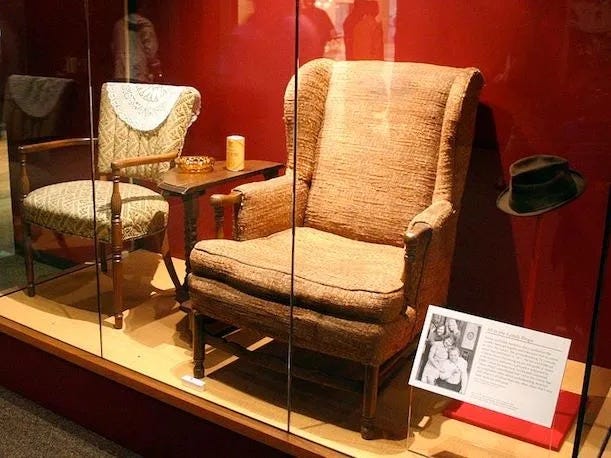
Image: Edith and Archie’s chairs, on display at the Smithsonian American History Museum, 2008. Photo by Wikimedia.
Video: Franklin Roosevelt vs Richard Nixon: Archie debates liberal Cousin Maude. From Season 2, Episode 12 ‘Cousin Maude’s Visit,” 1971.
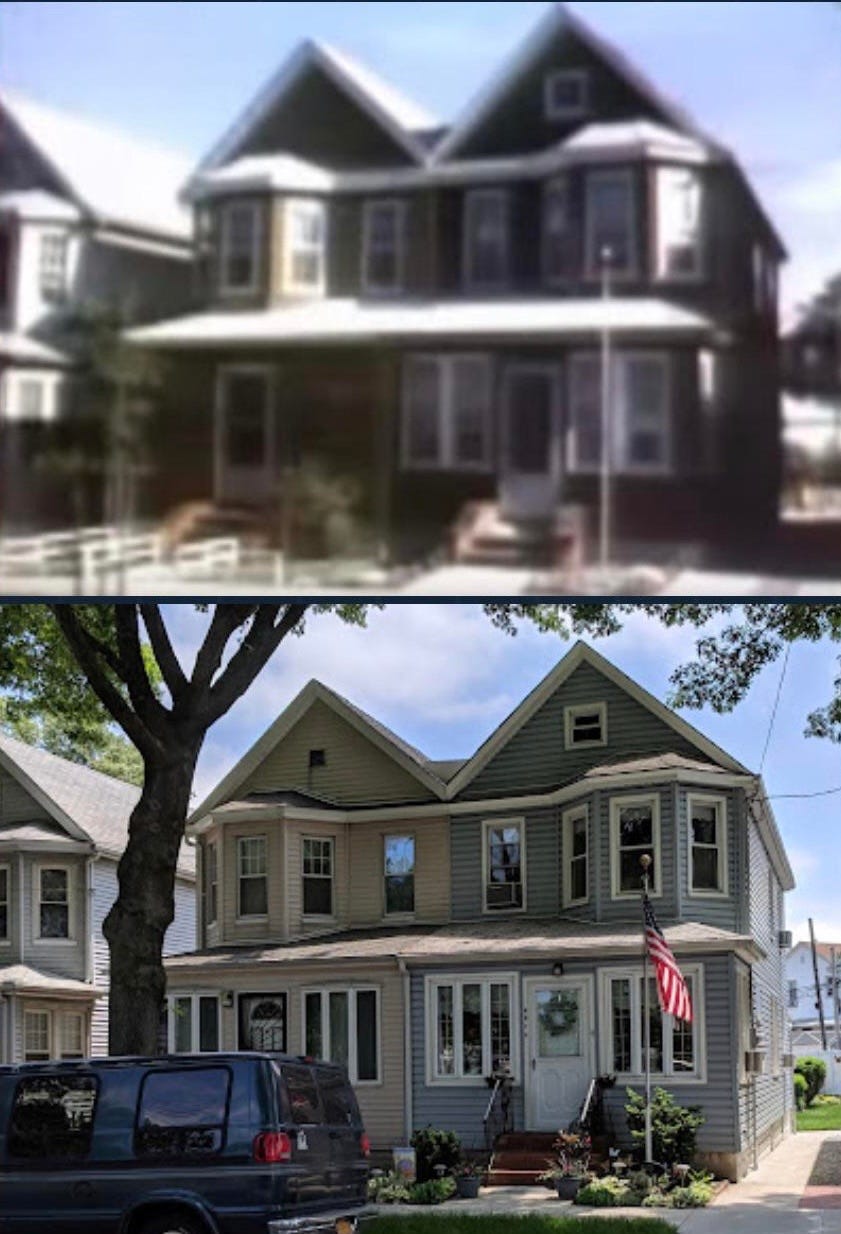
Image: All In The Family House - Queens. The All in the Family house is located on Cooper Avenue in Queens, New York. On the final shot of the opening credits this house is seen as the home of Archie and Edith Bunker. The address on the show was the fictitious 704 Hauser Street. The house, now much remodeled, sits across the street from St. John Cemetery. All In The Family ran from 1971 to 1979 on CBS and was shot in Los Angeles. The house here in Queens was only seen in the brief shot on the opening credits, used to establish where the Bunker’s lived.
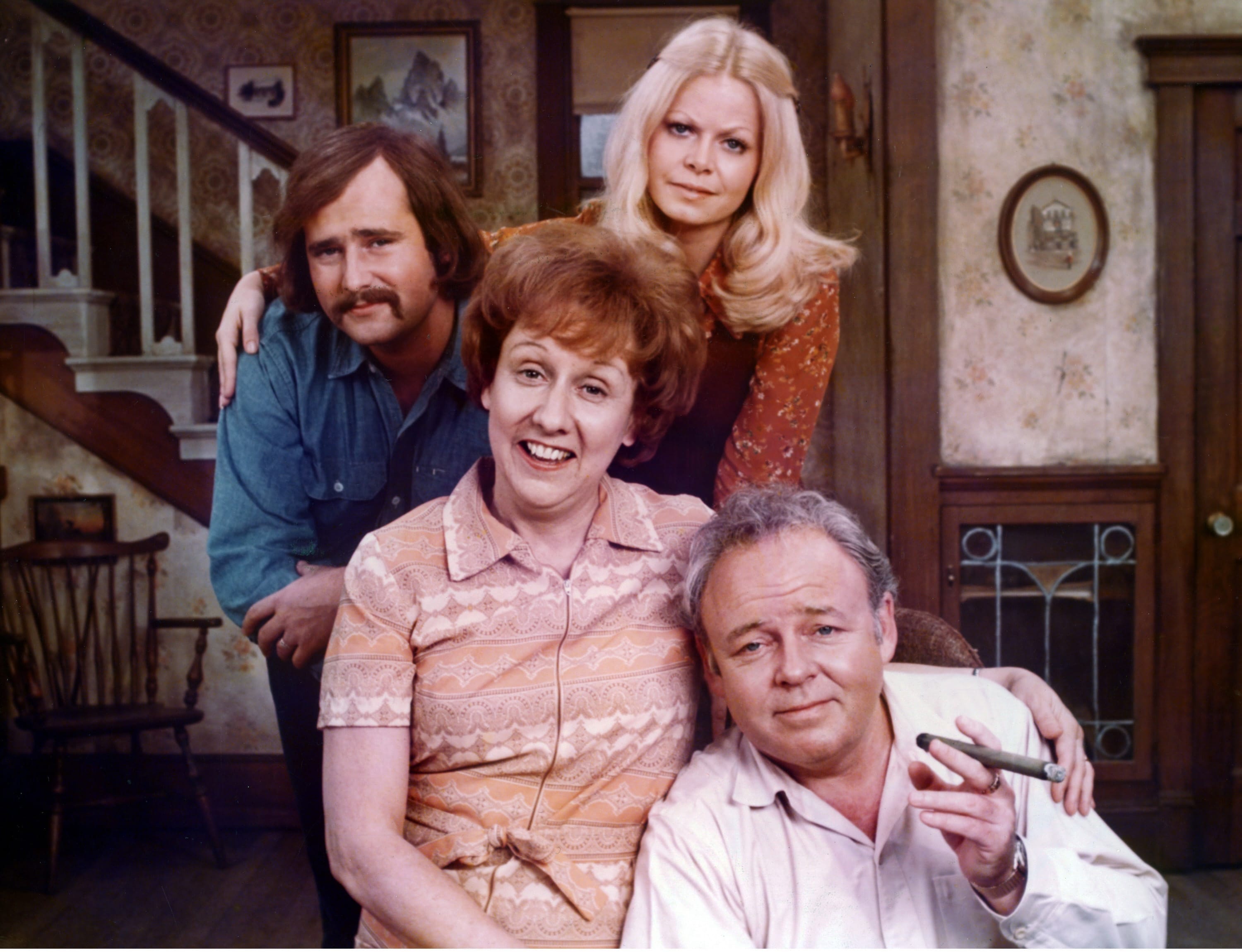
Image: The cast of All in the Family 1970: Rob Reiner, Sally Struthers, Jean Stapleton and Carroll O’Connor. Michael Ochs Archives//Getty Images.

Image; TV character Archie raging at the world. All in the Family, 1971-1979. Courtesy of the Everett Collection.
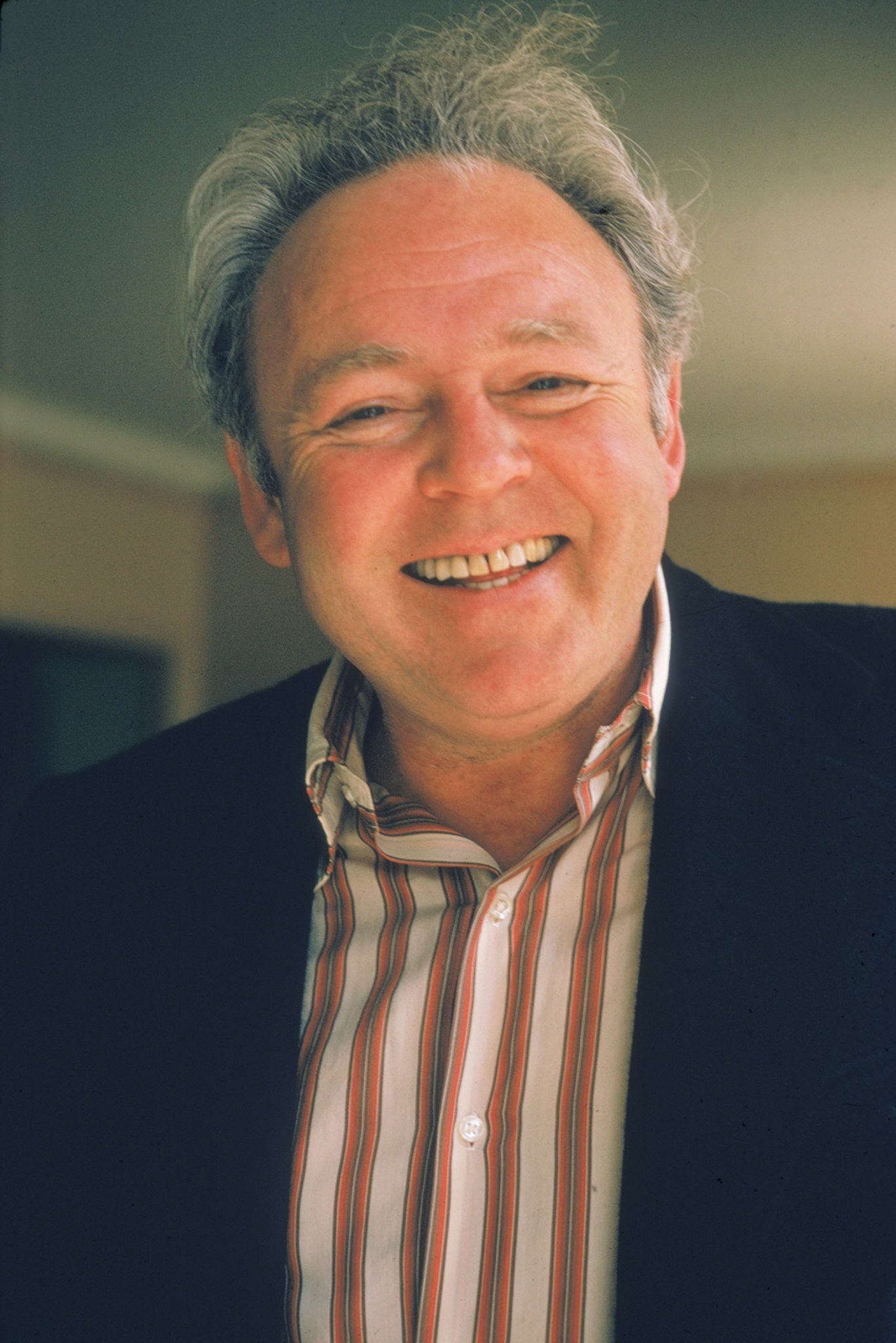
Image: Actor Carroll O’Connor.
Video: Opening and closing credits of the television sitcom, All in the Family.