
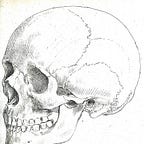

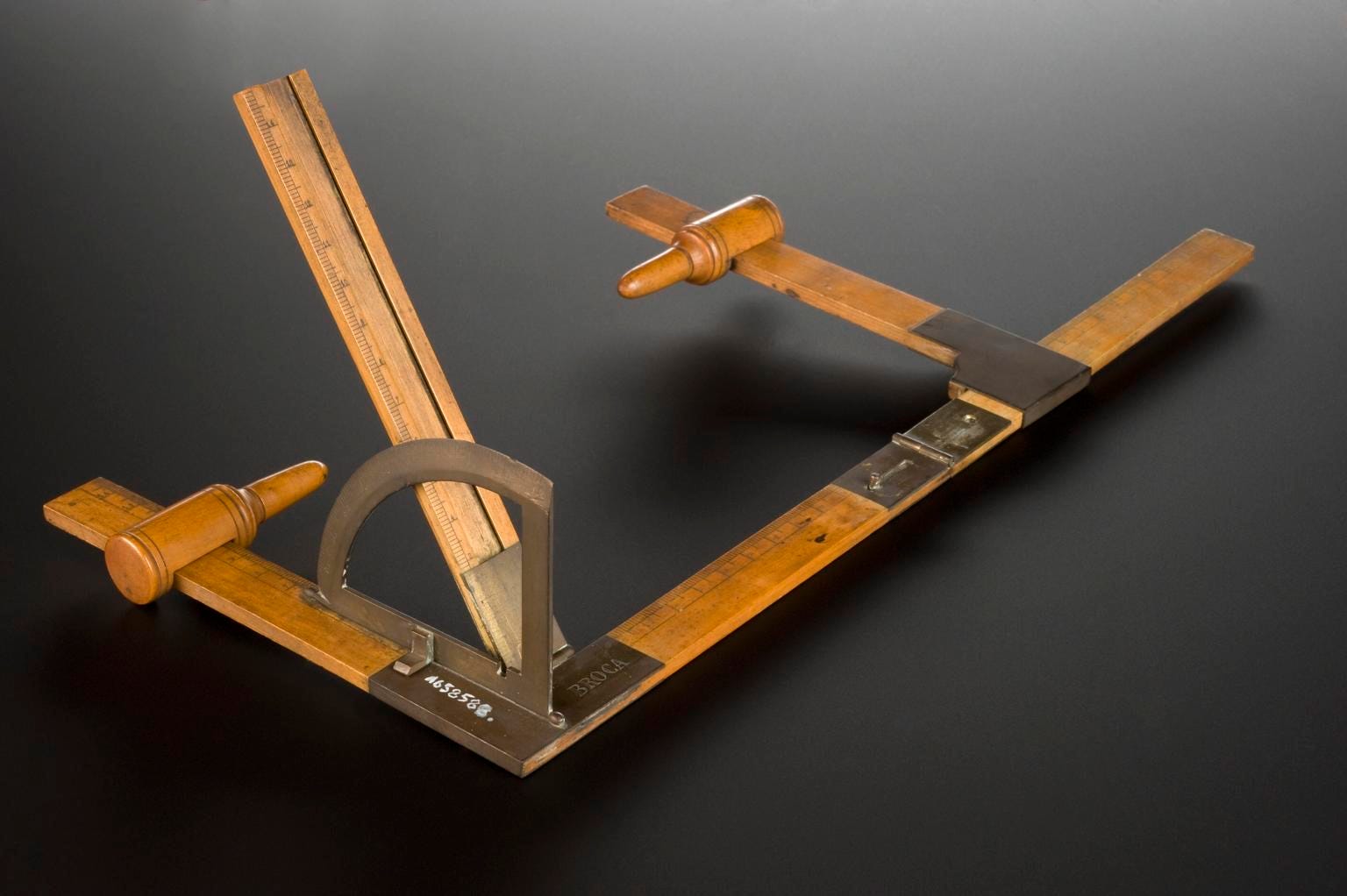
Image: Wooden and brass craniometer with various hinged attachments, used by Paul Broca, a pioneering craniologist, probably French, 1840-1880. This craniometer includes various hinged attachments to aid measurement of skull sizes. Probably made in France, it was used by Paul Broca (1824-1880) who was a French surgeon, anthropologist and pioneering craniologist. Science Museum Group Collecti. The Board of Trustees of the Science Museum, France, 1840-1880. A658588 Science Museum Group Collection Online. Accessed 21 September 2026. https://collection.sciencemuseumgroup.org.uk/objects/co134346/wooden-and-brass-craniometer-france-1840-1880.
Folks, more than ever, we need to counter what’s happening to our history because there are plenty of people who don’t, can’t, or won’t tell this history truthfully. So subscribe for free and join me in that work, or become a paid subscriber and help make the research, writing, and storytelling behind 400 Years possible.
I greatly appreciate it.
The 18th century. It was an age enchanted by classification. The natural world seemed almost offensively abundant, full of living things that differed in ways obvious and subtle, and the ambition of men such as Carl Linnaeus was to impose order upon it. A plant collected in Sweden ought to be recognizable as the same species when encountered elsewhere. An animal ought to possess a name and a place. The apparent confusion of creation could be reorganized into kingdoms, classes, orders, genera, and species until the world resembled an immense cabinet whose drawers had finally been labeled.
Human beings went into the cabinet too.
In the first edition of Systema Naturae in 1735, Linnaeus placed humanity within the animal kingdom and divided human beings principally by geography and appearance into European, American, Asian, and African varieties. But geography did not remain geography for long. By 1758, Linnaeus was attaching temperaments, bodily traits, customs, and even political characteristics to his continental divisions. The European did not simply come from Europe, nor the African merely from Africa. Each category began accumulating qualities that seemed to describe how its members thought, behaved, governed, and lived.
The movement from geography to character happened imperceptibly. A naturalist began by noting color and location. He ended by attaching personality to the color and social capacity to the location. An enormous continent containing millions of people, hundreds of languages, religions, governments, economies, and histories could be compressed into a single human variety and then given a temperament.
No ship appeared on Linnaeus’s page. No sugar field in Jamaica. No slave market in Charleston. The language was Latin, the form taxonomic, the purpose apparently detached from politics. Yet the categories were developing during the great expansion of European empire and Atlantic slavery, when Europeans were acquiring unprecedented power to name the people they encountered and unprecedented economic reasons to believe that those people belonged somewhere below themselves.
Not every naturalist explained human difference in the same way. Georges-Louis Leclerc, Comte de Buffon, regarded humanity as a single species and believed climate, food, migration, and environment could gradually alter human appearance. Human varieties were therefore historical rather than permanently separate creations. Move people into another climate, allow generations to pass, and their descendants might change.
But even this more fluid understanding could preserve hierarchy. Buffon described variation from an assumed human standard and used the language of degeneration for departures from it. The theory allowed bodies to change while leaving Europeans conveniently close to the point from which change was measured.
Anatomists tried another route. Petrus Camper, a Dutch physician and anatomist, became interested in the proportions of the human face. He drew lines along the skull and face and calculated what became known as the facial angle. Camper himself did not devise the procedure as a scientific ranking of races, and he explicitly resisted some of the hierarchical conclusions later attributed to him. But the picture possessed a life beyond its maker. Put profiles beside one another and comparison became almost irresistible. European head. African head. Classical statue. Ape.
Later racial theorists could rearrange a tool created for anatomy and artistic proportion into what looked like a ladder. The diagram traveled farther than the caution.
Johann Friedrich Blumenbach encountered the problem from still another direction. Working at Göttingen in the 1770s, he examined skulls and accounts of peoples from different regions and argued that all human beings belonged to one species. Human populations blended into one another. There were no impassable biological walls separating them. Climate and circumstance mattered, and what appeared fixed at one moment might be the product of long environmental change.
Yet Blumenbach classified too. Over successive editions of his work he settled upon five principal human varieties. In 1795 he gave them names that included Mongolian, Ethiopian, American, Malay, and a term that would outlive almost every scientific proposition surrounding it:
Caucasian.
The name came partly from Blumenbach’s admiration for a woman’s skull from Georgia in the Caucasus, which he regarded as especially beautiful. He placed the Caucasian variety near what he imagined as humanity’s original form, from which other appearances had diverged.
There was an irony in the enormous afterlife of the term. Blumenbach rejected separate human species. He repeatedly rejected claims that Africans lacked intellectual ability. He pointed to Black accomplishment and emphasized the continuity among human populations. But future generations inherited his boxes more easily than his qualifications.
The categories remained after the argument surrounding them had been forgotten.
Across the Atlantic, Thomas Jefferson had a problem. He believed Black people were inferior to white people. What he did not possess, in the early 1780s, was proof.
The distinction troubled him.
In Notes on the State of Virginia, written in response to a series of questions from the French diplomat François Barbé-Marbois, Jefferson ranged confidently across the natural and political world of his state. He described its rivers and mountains, its animals and minerals, its laws, population, government and climate. He disputed European naturalists who claimed that life itself degenerated in America. He could be empirical when empiricism served him, piling observation upon observation until Virginia emerged as a place that could be measured and defended.
Then he came to Black people.
Jefferson had lived among enslaved people all his life. They cooked his food, planted and harvested his crops, built and maintained his houses, cared for his children, accompanied him on journeys and generated much of the wealth that permitted him to become a gentleman of learning. Yet when he attempted to explain what Black people were, the precision faltered.
He found differences everywhere: skin, hair, odor, heat tolerance, memory, reason, imagination, beauty, emotion.
He believed Black people equal to whites in memory but inferior in reason and imagination. He found Black artistic capacity wanting. He compared Black people unfavorably with Native Americans. He wondered whether the differences were innate.
And then, at the edge of a conclusion that would degrade millions of people, Jefferson hesitated.
A proposition so large required more evidence, he admitted. Faculties of mind could not be submitted to a knife or a lens as easily as matter could. The circumstances under which human abilities developed were difficult to disentangle. And although white Americans had held Black people under observation for generations, Jefferson conceded something extraordinary: they had not yet sufficiently examined them as subjects of natural history.
So he called his conclusion a suspicion. Black people appeared to him inferior in body and mind. But the case, he acknowledged, had not been proved.
The uncertainty would not last.
Not because everyone who investigated the question eventually agreed with Jefferson. They did not. The history is more revealing than that. White naturalists could examine the same broad problem and reach radically different conclusions.
James Cowles Prichard, an English physician and ethnologist, defended the common origin of humanity. Friedrich Tiedemann, the German anatomist, would later compare African and European brains and find no anatomical basis for Black intellectual inferiority. Blumenbach himself continued to resist the hardening of human varieties into separate species. There was always another interpretation available. But there were also men who wanted something firmer than Jefferson’s suspicion.
Toward the end of the eighteenth century, the English surgeon Charles White began arranging anatomy into a hierarchy. In his 1799 Account of the Regular Gradation in Man, White compared bodies, skulls, limbs, and facial structures and placed human variation within a larger sequence extending through the animal world. The old visual comparisons acquired a sharper implication. Anatomy did not merely show difference; it could supposedly show position.
The human body became a map upon which intellectual rank might be plotted.
Georges Cuvier carried far greater scientific prestige. By the early nineteenth century he stood among Europe’s most formidable comparative anatomists, famous for reconstructing extinct creatures from fragments and demonstrating relationships between structure and function. When Cuvier described human populations, anatomy, culture, and civilization began sliding into one another. Europeans occupied the civilization from which the others were judged. Africans could be characterized simultaneously through facial structure and supposed barbarism until political and historical difference began to look like biological destiny.
The inference moved easily because Europe itself seemed to furnish the evidence. Europeans commanded empires, possessed enormous wealth, dominated Atlantic commerce, and had enslaved millions of Africans and their descendants. Those political facts could then be read backward. European domination became evidence of European capacity; African subordination evidence of African limitation.
A society could create the condition and then point to the condition as proof of nature.
By the 1830s, the search for something harder and apparently less susceptible to circumstance moved increasingly toward bone. A skull could not change its testimony to please an interviewer. It could not conceal its education or exaggerate its accomplishments. It possessed none of the obvious instability of culture or politics. Skin could be altered by climate, perhaps. Customs could change. Civilizations could rise. But bone looked ancient and permanent.
Friedrich Tiedemann measured it and found no anatomical basis for Black intellectual inferiority.
Samuel George Morton measured it and did. In Philadelphia, Morton began assembling what became one of the world’s most famous collections of human skulls. Physicians, soldiers, travelers, archaeologists, and collectors learned that he wanted them. Crania arrived from distant places and accumulated on shelves.
The people who had once lived inside them vanished almost completely from the experiment. Their language no longer mattered. Their childhood disappeared. Whether they had been enslaved or free, hungry or well fed, literate or denied schooling, sick or healthy, wealthy or impoverished—all of that fell away.
The skull remained.
Morton filled its cavity, first with seed and later with lead shot, and measured the volume. Then another. And another. Soon the skulls became numbers, and the numbers became averages arranged beneath racial headings.
The procedure had an austere elegance to it. A man placed shot into bone, poured it into a vessel, read the quantity, and wrote down the result. Nothing about the movement looked political. No planter stood beside the table. No slave auction could be heard outside. The measuring vessel had no opinion about abolition.
That was precisely why the numbers carried such authority. Morton associated cranial capacity with intellectual capacity. His racial averages placed Caucasians above Africans. What Jefferson had called suspicion seemed now to possess arithmetic.
The controversy surrounding Morton would continue long after his death. Stephen Jay Gould famously argued in the twentieth century that Morton’s racial expectations had distorted his measurements and calculations. Later investigators reexamined Morton’s original materials and challenged significant parts of Gould’s accusation, concluding that Morton may have measured more carefully than Gould allowed.
But that later correction did not restore Morton’s racial hierarchy. It revealed something more difficult.
The measurement itself could be reasonably careful while the scientific architecture surrounding it remained fundamentally defective. Morton was already working within inherited racial categories that sorted human beings into supposedly natural groups. He had already assumed that average cranial volume meaningfully represented intellectual capacity. And he treated populations created partly through history, geography, migration, and social classification as though nature had handed him discrete biological races waiting to be compared.
The lead shot did not need to be fraudulent. It merely needed to answer the question Morton had designed for it.
In 1839, Crania Americana gave the measurements a magnificent physical form. The volume was large and expensive. Its plates reproduced skulls with almost sumptuous precision. The reader could examine profile, shape, proportion, number.
The skull became both specimen and illustration.
Five years later, Morton carried the method backward into antiquity in Crania Aegyptiaca. Egypt posed a particular difficulty for racial theorists because one of the world’s great ancient civilizations stood on African soil. Morton attempted to determine the racial identity of the ancient Egyptians through anatomy and monuments, placing their achievements outside the Black African populations that white racial theory increasingly associated with incapacity.
Civilization itself was becoming racial evidence.
If a civilization was great, its creators could be pulled toward the Caucasian category. If a people were described as primitive, their supposed primitiveness could be cited as evidence of racial nature. The categories were beginning to prove themselves with evidence they had already organized.
In Mobile, Alabama, Josiah Nott read Morton with particular interest. Nott was a physician, trained in Philadelphia and Paris, who participated seriously in contemporary medicine. He was interested in disease, climate, and the geographical distribution of human populations. His intellectual credentials mattered precisely because he was not merely repeating plantation folklore. He embraced polygenism.
The races, Nott increasingly argued, did not represent variations descended from one ancestral population. Their differences were fixed deeply enough to suggest separate origins. This carried an enormous implication in a slaveholding society. If Black disadvantage resulted from slavery, then abolishing slavery might alter the condition. If Black inferiority had existed in nature before slavery, emancipation could change nothing fundamental.
Polygenism moved the hierarchy backward beyond law, beyond American history, beyond the Atlantic slave trade, until the social arrangement looked almost recent beside the natural one. White Americans had created slavery. Polygenism implied that nature had created the races for which slavery appeared suitable.
Then Louis Agassiz arrived in America. He brought an authority Morton and Nott could not easily duplicate.
Agassiz had earned his fame studying subjects far removed from the American racial controversy. Born in Switzerland and trained in Europe, he had become internationally known through his work on fossil fishes and glaciers. He could reconstruct vast natural histories from physical remains and had helped persuade scientists that enormous ice sheets once covered portions of the earth.
When he came to the United States in 1846 to lecture at the Lowell Institute, Harvard wanted him. In 1847, Harvard appointed him professor of zoology and geology. Wealthy patrons financed him. Audiences crowded his lectures. He understood classification as something close to the architecture of creation.
The prestige mattered.
A Southern physician defending racial hierarchy could be accused of finding science convenient to slavery. A Harvard naturalist famous for glaciers seemed to arrive from somewhere above the controversy.
Agassiz encountered Morton’s skull collection and was deeply impressed by it. His own encounters with Black Americans had already produced a powerful sense of racial difference, and Morton’s physical evidence seemed to provide a structure within which that reaction could become scientific.
By 1850, Agassiz had become a prominent defender of polygenist thinking. The different human races belonged, in his view, to distinct centers or acts of creation. Yet Agassiz did not always equate separate origins with separate species. He could speak of the unity of mankind, even the unity of the human species, while denying a single origin for the races. Their characteristics were not superficial responses to climate. They were durable parts of the natural order. He could therefore insist that he was not discussing slavery. He was discussing creation.
But in the United States the distinction could never remain so clean. A theory that made racial inequality primordial had obvious significance in a society whose wealth and political order rested heavily upon Black enslavement. Charles Darwin, following the American controversy from abroad, recognized the usefulness immediately. He observed privately in 1850 that Agassiz’s lectures on separate human species must have offered considerable comfort to American slaveholders.
That same year Agassiz traveled south and examined enslaved Africans and African Americans in South Carolina. With the assistance of the Columbia physician and naturalist Robert W. Gibbes, enslaved people were selected for study and a local photographer, Joseph T. Zealy, produced fifteen daguerreotypes.
The individuals need not detain us here; their lives deserve another story. What matters in this one is what the episode added to the evolution of racial knowledge.
Morton’s skulls had offered measurement. Photography offered vision. A cranial table required the reader to trust the scientist who had gathered and interpreted the numbers. A photograph seemed almost to remove the scientist from the encounter. The viewer could look directly at what nature had supposedly supplied.
But the scientist had never disappeared. He stood everywhere outside the frame. Agassiz had chosen the question before the camera appeared. Men selected the people who would represent racial types. Their bodies were stripped of much of the clothing and context through which nineteenth-century people normally presented social identity. They were arranged to permit physical comparison. Labels attached racial and ethnic classifications to the resulting plates.
Only then did the camera record the scene. The photograph was faithful. The experiment was not neutral. The lens recorded precisely what white men had arranged before it and then concealed the arrangement by making the resulting image look self-evident.
Four years later, much of the American racial science developed over the previous decades arrived between the covers of a single enormous volume. Josiah Nott and George Gliddon called it Types of Mankind.
Morton had died in 1851, but his authority suffused the book. Agassiz contributed. Anatomy sat beside Egyptology, geography beside biblical chronology, skulls beside ancient monuments. The volume ran beyond seven hundred pages and was crowded with illustrations, tables, profiles, and comparisons.
The word on the title page was important.
Types.
A type did not require much knowledge of the individual. A person arrived already partly explained by membership in the category.
The sheer abundance of the volume became part of its persuasive force. A reader moved from one anatomical diagram to another, one ancient image to another, one table to another. No single piece of evidence had to carry the entire argument. The accumulated material created the impression of intellectual convergence.
Morton had measured. Agassiz had classified. Nott practiced medicine. Gliddon brought Egyptology. Ancient monuments seemed to speak. Anatomy seemed to speak. Geography seemed to speak.
If so many forms of knowledge appeared to point toward racial permanence, the conclusion could begin to feel less like a proposition requiring proof and more like the background against which new questions were asked. Scientific racism was becoming most powerful at the moment when it stopped sounding like an argument. It could become something educated white Americans simply knew.
Nott and Gliddon returned to the subject in Indigenous Races of the Earth in 1857. Once again the inquiry sprawled across disciplines. Climate, disease, crania, language, paleontology, geography, and human distribution could all be brought to bear on the same racial problem. The widening scope gave scientific racism an unusual adaptability. If one line of evidence weakened, another remained available.
A skull could indicate difference. So could a face. So could climate. So could disease. So could the history of civilization. So could the political condition of Africa. So could the condition of enslaved Black Americans themselves.
The last form of evidence contained a particularly consequential circularity. Across much of the slaveholding South, white-controlled laws and institutions had denied generations of enslaved Black people access to systematic education and then cited widespread illiteracy as evidence of intellectual incapacity. They had excluded enslaved Black people from political power and, in many places, restricted the political rights of free Black people, then cited Black exclusion from government as evidence that Black people could not govern. They had enslaved people, denied the enslaved independent legal ownership of property, broken families through sale, and then inspected the resulting social conditions for signs of racial character.
The experiment had become much larger than Agassiz’s camera. A society could produce an inequality and then ask science to explain the inequality by examining the people upon whom it had been imposed.
Then the science moved.
Charles Darwin did not set out to rescue Americans from racial thinking, and evolutionary science would itself be enlisted in racist projects. But evolution dealt a serious blow to the fixed creationism upon which Agassiz had built his understanding of species and race. Agassiz refused to follow. He rejected Darwinian evolution and remained committed to special creation. The world of biology was beginning to move around him. The great classifier who had seemed so modern in the 1840s was beginning to represent an older scientific order.
On the Origin of Species appeared in London in November 1859. Darwin said remarkably little there about human beings. But the implications were difficult to contain.
Species were not eternally fixed forms separately placed into nature. They had histories. They changed. They shared descent. They branched. They diverged. The natural world Agassiz understood as a set of created types was being replaced by a natural world connected through time. Darwin had already understood the racial implications of the argument years earlier. If species shared descent, the claim that human races had been independently created as fixed biological kinds became much harder to sustain.
But 1859 did not erase what had been constructed during the previous century. A book could arrive faster than a worldview could disappear.
By the opening months of 1860, the United States was moving toward an election that would rupture the Union, and white Americans possessed a racial vocabulary far more elaborate than the one available to Jefferson when he had written down his suspicion eight decades earlier.
A man who wanted to believe that Black people stood naturally below white people no longer had to rely upon a single explanation. He could open Morton and find skulls and measurements. He could read Agassiz and find fixed racial types embedded in creation. He could turn to Nott and Gliddon and find anatomy, Egyptology, disease, geography, monuments, and biblical interpretation marshaled across hundreds of pages.
One writer might insist that humanity descended from a common ancestor. Another might deny it. One might make climate central. Another inherited difference. One might appeal to scripture. Another natural history. The theories did not always agree. They did not need to. Again and again they arrived at a remarkably useful destination.
Black people appeared to possess differences deeper than history. Their supposed intellectual limitations could be placed in the brain or skull; their political condition could be made to reveal capacity; the absence of European forms of civilization in much of Africa could be made to stand as a verdict upon African minds.
Meanwhile white accomplishment required comparatively little biological explanation. Far less scientific attention was directed toward whether the accumulation of African land, coerced labor, colonial wealth, political power, and educational opportunity might explain European advancement. The measuring instrument ordinarily pointed in the other direction.
That asymmetry is easy to miss if the history is told merely as a procession of erroneous theories. Linnaeus had classified. Blumenbach had divided humanity into varieties while warning against rigid boundaries. Camper’s anatomical drawings had been transformed into racial comparisons. White had arranged bodies into gradations. Cuvier had attached civilization to anatomy. Morton had filled skulls and produced averages. Nott had helped make polygenism useful to the slave South. Agassiz had brought the prestige of Harvard and natural history to fixed racial types. Nott and Gliddon had assembled the accumulated claims into encyclopedic monuments of racial knowledge. And then Darwin arrived and destabilized one of their central foundations.
Yet on the eve of the Civil War the hierarchy stood more securely in American intellectual culture than any single theory beneath it. That was what had changed since Jefferson.
He had suspected.
By 1860 white Americans had libraries.
There were plates and skulls and measurements, lectures and classifications, maps and tables, respected names and prestigious institutions. A proposition developed within societies already entangled with empire and Atlantic slavery had acquired the appearance of having been independently discovered by science.
The achievement was therefore larger than any individual naturalist. White Americans had spent generations constructing a social world in which Black people occupied a subordinate position. Then some of their most respected intellectual institutions had turned toward Black people and searched their bodies, histories, cultures, and societies for the reason.
By 1860, scientific racism had supplied many answers.
What it had rarely subjected to the same examination was the white society asking the question.
Intellectual Map
Primary Sources
Agassiz, Louis. “The Diversity of Origin of the Human Races.” Reprinted from The Christian Examiner, July 1850. 1850. Library of Congress. https://tile.loc.gov/storage-services/service/ll/llmlp/Diversity-of-Origin/Diversity-of-Origin.pdf
Blumenbach, Johann Friedrich. De generis humani varietate nativa. 3rd ed. Gottingae: Apud Vandenhoek et Ruprecht, 1795. https://archive.org/details/degenerishumaniv00blum
Blumenbach, Johann Friedrich. The Anthropological Treatises of Johann Friedrich Blumenbach. Translated and edited by Thomas Bendyshe. London: Longman, Green, Longman, Roberts, & Green for the Anthropological Society, 1865.https://archive.org/details/anthropologicalt00blum
Buffon, Georges-Louis Leclerc, comte de. Histoire naturelle, générale et particulière, avec la description du Cabinet du roy. Vol. 2, Histoire générale des animaux; Histoire naturelle de l’homme. Paris: Imprimerie Royale, 1750.https://archive.org/details/histoirenaturel2buffa
Camper, Petrus. The Works of the Late Professor Camper, on the Connexion between the Science of Anatomy and the Arts of Drawing, Painting, Statuary, &c. &c. Translated by Thomas Cogan. London: C. Dilly, 1794.https://archive.org/details/b24927715
Cuvier, Georges. Le règne animal distribué d’après son organisation, pour servir de base à l’histoire naturelle des animaux et d’introduction à l’anatomie comparée. Vol. 1. Paris: Déterville, 1817.https://archive.org/details/lergneanimaldi181701cuvi
Darwin, Charles. Charles Darwin to William Darwin Fox, September 4, 1850. Letter no. 1352. Darwin Correspondence Project. https://darwin-editorial.darwinproject.ac.uk/view/letters/DCP-LETT-1352
Darwin, Charles. On the Origin of Species by Means of Natural Selection; or, The Preservation of Favoured Races in the Struggle for Life. London: John Murray, 1859. https://archive.org/details/onoriginofspec00darw
Jefferson, Thomas. Notes on the State of Virginia. London: John Stockdale, 1787.https://archive.org/details/notesonstateofvi1787jeff
Linnaeus, Carl. Caroli Linnaei, Sveci, Doctoris Medicinae, Systema naturae, sive regna tria naturae systematice proposita per classes, ordines, genera, & species. Lugduni Batavorum [Leiden]: Apud Theodorum Haak; Ex Typographia Joannis Wilhelmi de Groot, 1735. https://archive.org/details/Cat31011605
Linnaeus, Carl. Systema naturae per regna tria naturae, secundum classes, ordines, genera, species, cum characteribus, differentiis, synonymis, locis. 10th ed. Vol. 1. Holmiae [Stockholm]: Impensis Direct. Laurentii Salvii, 1758.https://archive.org/details/mobot31753000798873
Morton, Samuel George. Catalogue of the Skulls of Man and the Inferior Animals in the Collection of Samuel George Morton. 3rd ed. Philadelphia: Merrihew & Thompson, 1849. https://archive.org/details/101202253.nlm.nih.gov
Morton, Samuel George. Crania Aegyptiaca; or, Observations on Egyptian Ethnography, Derived from Anatomy, History and the Monuments. Philadelphia: John Penington, 1844. https://archive.org/details/craniaaegyptiac00mortgoog
Morton, Samuel George. Crania Americana; or, A Comparative View of the Skulls of Various Aboriginal Nations of North and South America: To Which Is Prefixed an Essay on the Varieties of the Human Species. Philadelphia: J. Dobson; London: Simpkin, Marshall, 1839. https://archive.org/details/cihm_38366
Nott, Josiah C. Two Lectures on the Natural History of the Caucasian and Negro Races. Mobile, AL: Dade and Thompson, 1844.https://archive.org/details/NottJosiahClarkTwoLecturesOnTheNaturalHistoryOfTheCaucasianAndNegroRaces
Nott, Josiah C., and George R. Gliddon. Indigenous Races of the Earth; or, New Chapters of Ethnological Inquiry; Including Monographs on Special Departments of Philology, Iconography, Cranioscopy, Palaeontology, Pathology, Archaeology, Comparative Geography, and Natural History. Philadelphia: J. B. Lippincott & Co.; London: Trübner & Co., 1857. https://archive.org/details/indigenousraceso00nott
Nott, Josiah C., and George R. Gliddon. Types of Mankind; or, Ethnological Researches, Based upon the Ancient Monuments, Paintings, Sculptures, and Crania of Races, and upon Their Natural, Geographical, Philological and Biblical History. Philadelphia: J. B. Lippincott, Grambo & Co., 1854. https://archive.org/details/typesofmankindor01nott
Library of Congress copy: https://www.loc.gov/item/49043133/
Prichard, James Cowles. Researches into the Physical History of Man. London: Printed for John and Arthur Arch, 1813.https://archive.org/details/researchesintoph00pricrich
Tiedemann, Friedrich. “On the Brain of the Negro, Compared with That of the European and the Orang-Outang.” Philosophical Transactions of the Royal Society of London 126 (1836): 497–527. https://archive.org/details/jstor-108042
Royal Society record: https://makingscience.royalsociety.org/items/pt_22_5/paper-on-the-brain-of-the-negro-sic-compared-with-that-of-the-european-and-the-orang-outang-orangutan-by-dr-frederick-friedrich-tiedemann
White, Charles. An Account of the Regular Gradation in Man, and in Different Animals and Vegetables; and from the Former to the Latter. London: C. Dilly, 1799. https://archive.org/details/b24924507
Zealy, Joseph T. Fifteen daguerreotypes made in connection with Louis Agassiz’s racial study. Columbia, South Carolina, 1850. International African American Museum, Charleston, SC. Research documentation developed by the Peabody Museum of Archaeology and Ethnology, Harvard University. https://peabody.harvard.edu/ZD-about-research-project
Secondary Sources
Barbash, Ilisa, Molly Rogers, and Deborah Willis, eds. To Make Their Own Way in the World: The Enduring Legacy of the Zealy Daguerreotypes. Cambridge, MA: Peabody Museum Press; New York: Aperture, 2020.
https://archive.org/details/tomaketheirownwa0000unse/page/78/mode/1up
Curran, Andrew S. The Anatomy of Blackness: Science and Slavery in an Age of Enlightenment. Baltimore: Johns Hopkins University Press, 2011. https://archive.org/details/anatomyofblackne0000curr
Dain, Bruce. A Hideous Monster of the Mind: American Race Theory in the Early Republic. Cambridge, MA: Harvard University Press, 2002. https://archive.org/details/hideousmonsterof0000dain
Fabian, Ann. The Skull Collectors: Race, Science, and America’s Unburied Dead. Chicago: University of Chicago Press, 2010.
https://archive.org/details/skullcollectorsr0000fabi
Fredrickson, George M. The Black Image in the White Mind: The Debate on Afro-American Character and Destiny, 1817–1914. New York: Harper & Row, 1971. https://archive.org/details/blackimageinwh00fred
Gossett, Thomas F. Race: The History of an Idea in America. Dallas: Southern Methodist University Press, 1963. Reprint, New York: Oxford University Press, 1997. https://academic.oup.com/book/49034
Gould, Stephen Jay. The Mismeasure of Man. New York: W. W. Norton, 1981.https://archive.org/details/mismeasureofman00goul_0
Irmscher, Christoph. Louis Agassiz: Creator of American Science. Boston: Houghton Mifflin Harcourt, 2013.https://www.si.edu/object/louis-agassiz-creator-american-science-christoph-irmscher%3Asiris_sil_1002517
Jordan, Winthrop D. White over Black: American Attitudes toward the Negro, 1550–1812. Chapel Hill: University of North Carolina Press for the Institute of Early American History and Culture, 1968.https://archive.org/details/whiteoverblackam0000jord_n9w3
Lewis, Jason E., David DeGusta, Marc R. Meyer, Janet M. Monge, Alan E. Mann, and Ralph L. Holloway. “The Mismeasure of Science: Stephen Jay Gould versus Samuel George Morton on Skulls and Bias.” PLoS Biology 9, no. 6 (2011): e1001071. https://journals.plos.org/plosbiology/article?id=10.1371/journal.pbio.1001071
Lurie, Edward. “Louis Agassiz and the Races of Man.” Isis 45, no. 3 (September 1954): 227–242.https://pubmed.ncbi.nlm.nih.gov/13232804/
Meijer, Miriam Claude. Race and Aesthetics in the Anthropology of Petrus Camper (1722–1789). Amsterdam: Rodopi, 1999. https://www.si.edu/object/race-and-aesthetics-anthropology-petrus-camper-1722-1789-miriam-claude-meijer%3Asiris_sil_896214
Mitchell, Paul Wolff. “The Fault in His Seeds: Lost Notes to the Case of Bias in Samuel George Morton’s Cranial Race Science.” PLoS Biology 16, no. 10 (2018): e2007008. https://journals.plos.org/plosbiology/article?id=10.1371/journal.pbio.2007008
Painter, Nell Irvin. The History of White People. New York: W. W. Norton, 2010.
https://archive.org/details/historyofwhitepe0000pain
Rogers, Molly. Delia’s Tears: Race, Science, and Photography in Nineteenth-Century America. New Haven, CT: Yale University Press, 2010.
https://archive.org/details/deliastearsraces0000roge
Shipman, Pat. The Evolution of Racism: Human Differences and the Use and Abuse of Science. New York: Simon & Schuster, 1994. https://archive.org/details/evolutionofracis00ship
Smedley, Audrey. Race in North America: Origin and Evolution of a Worldview. 2nd ed. Boulder, CO: Westview Press, 1999. https://archive.org/details/raceinnorthameri00smed
Stanton, William Ragan. The Leopard’s Spots: Scientific Attitudes toward Race in America, 1815–59. Chicago: University of Chicago Press, 1960.


